Applications
Cannabis producers, regulatory agencies, and research institutions rely on the UVM for automated, repeatable vapor product testing — from QA/QC and compliance to toxicology and analytical chemistry.
Primary Application
The UVM was purpose-built for cannabis oil cartridges, cannabis vaporizers, and THC/CBD vape products. Zero cleaning, disposable flow paths, and multi-channel testing solve the exact pain points that make cannabis vapor products so difficult to test with legacy smoking machines. Unlike competitors who adapted tobacco smoking machines for cannabis use, the UVM was designed from the ground up with a disposable flow path specifically because cannabis vapor condensate is sticky, viscous, and rapidly degrades the valves and tubing of conventional machines.
Hardware Qualification
Before committing to a hardware supplier, you need to know how their cartridges actually perform — not on a spec sheet, but under real puffing conditions with your oil, at your target wattage, over hundreds of puffs.
The UVM runs cartridges to depletion while logging pressure drop (clogging indicator), vapor density (output consistency), and coil resistance (electrical stability) on every single puff. A cartridge that clogs at puff 150, leaks oil into the airpath at puff 300, or produces burnt hits above 4W — you'll see it in the data before it reaches consumers.
With the 4-channel system, test four candidate cartridges from different suppliers under identical conditions in a single session. One run gives you a direct, quantitative comparison.
Pressure Drop App Note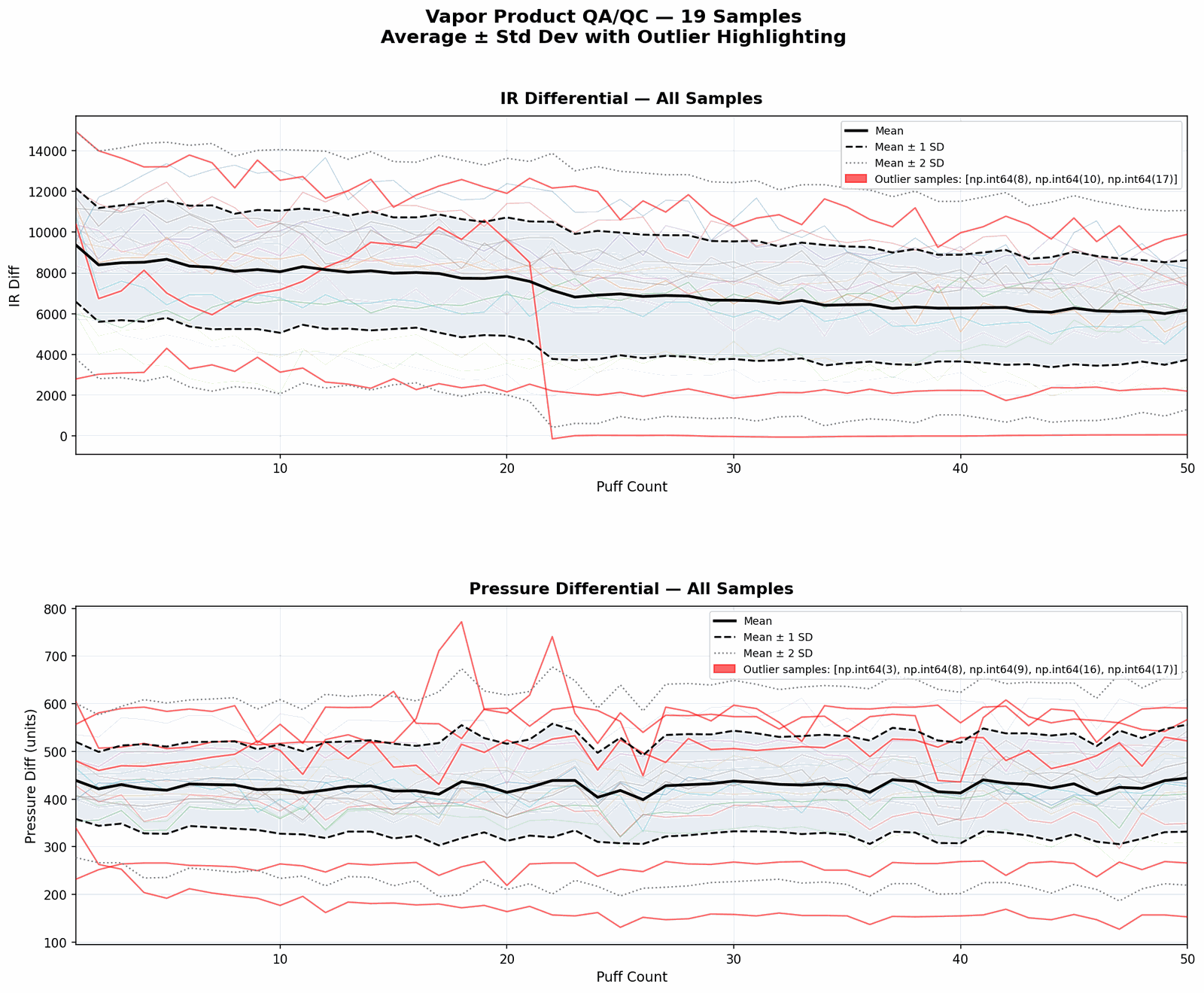
Oil & Formulation Comparison
Different oil formulations — varying ratios of distillate, terpenes, and cutting agents — behave differently in the same cartridge. Some produce more vapor. Some clog faster. Some deplete unevenly. The only way to know is to test them side by side under controlled conditions.
Load four formulations into identical cartridges, set the same puff profile and power level, and run them simultaneously. The UVM produces per-puff vapor density, pressure drop, and total puff count data for each — giving you a direct, objective comparison of how each oil performs in your chosen hardware.
This workflow is especially valuable for formulation service providers developing custom blends for multiple brand clients, and for MSOs optimizing a single formulation across their product line.
Puff Count Verification
Consumers see "300 puffs" on the package. Regulators want to know if that's true. Your competitors want to know if they can beat it. The UVM answers the question definitively.
The integrated IR vapor density sensor detects when a product stops producing aerosol, giving you the exact standardized puff count under your chosen conditions. Run the same SKU ten times and you'll have mean, standard deviation, and min/max — the statistical basis for a defensible label claim.
This is becoming a regulatory requirement in multiple jurisdictions. Canadian cannabis regulators already expect puff count data. Having standardized, instrument-generated results puts you ahead of the curve.
Puff Count App NotePower Optimization
Too low and you get thin, unsatisfying vapor. Too high and you get burnt hits, accelerated clogging, and potentially harmful thermal degradation products. The optimal wattage depends on the specific combination of cartridge hardware and oil formulation — and it's different for every product.
The UVM's 510 power cables bypass consumer batteries entirely, delivering precise, software-controlled wattage directly to the coil. With the 4-channel system, run the same cartridge/oil combination at four different power levels simultaneously. In a single session, you'll know exactly where the sweet spot is — and where the failure modes begin.
Power Characterization App NoteBatch Consistency
A single cartridge test tells you about that cartridge. Ten cartridges from the same batch tell you about your manufacturing process. The 10-channel UVM runs ten units simultaneously under identical conditions, producing the statistical data you need for real quality control.
Track batch-to-batch variation in puff count, pressure drop trends, and vapor output. Identify supplier quality drift before it becomes a consumer complaint. Build the QC dataset that demonstrates consistency to regulators, retail partners, and consumers.
For high-volume operators processing thousands of units per week, even a small sample from each batch — tested overnight, unattended — provides the statistical confidence that manual testing never can.
Multi-state operators and licensed producers in the US and Canada use the UVM to qualify hardware suppliers, optimize formulations, verify label claims, and build QC programs across their product lines.
Companies sourcing cartridges from overseas manufacturers use the UVM to verify incoming hardware quality before reselling to brands. Catch defective batches before they reach your customers.
Contract formulators developing custom blends for multiple brand clients use the UVM to objectively compare formulation performance across different hardware platforms — backing up their recommendations with data.
Canadian Market
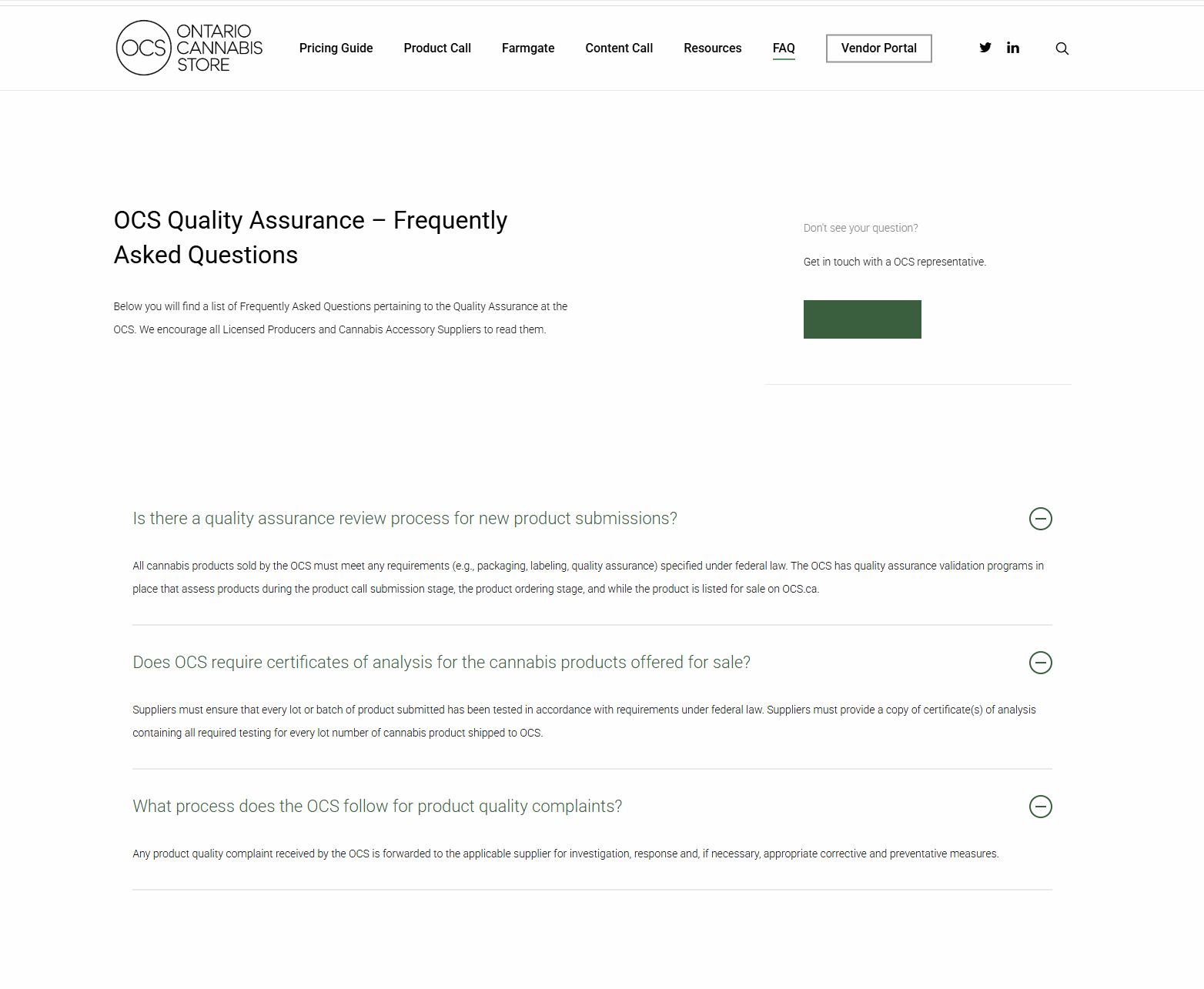
The Ontario Cannabis Store (OCS) — the exclusive distributor for Ontario, Canada's largest cannabis market — requires all vape product suppliers to meet strict quality assurance standards. All cannabis products sold by the OCS must provide certificates of analysis for every lot or batch submitted.
Several of our Canadian clients — including major licensed producers and MSOs like Organigram — came to Gram specifically to meet OCS testing requirements. The UVM provides the standardized, repeatable testing data these programs demand: pressure drop profiling, puff count verification, vapor output consistency, and emissions capture for chemical analysis.
Whether you're a licensed producer submitting new products to the OCS, or an existing supplier maintaining ongoing quality assurance, the UVM is the tool that gets you there.
From R&D to Production
Whether you're prototyping a new cartridge design or running production QC on 10,000 units, the UVM delivers the data you need at every stage.
Regulatory & Compliance
Government agencies and accredited labs use the UVM for protocol-compliant aerosol generation and emissions capture across all inhaled product categories — ENDS (Electronic Nicotine Delivery Systems), ANDS (Alternative Nicotine Delivery Systems), HTP (Heated Tobacco Products), and RRP (Reduced Risk Products) — supporting product authorization, surveillance, and enforcement programs.
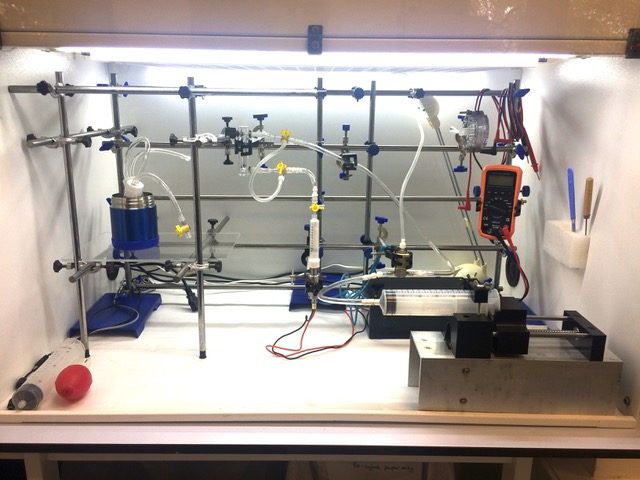
The UVM supports ISO 3308, ISO 20768 (e-cigarette aerosol generation), ISO 22486 (heated tobacco products), Health Canada Intensive (HCI), and CORESTA No. 81 puffing protocols out of the box. Define your puff volume, flow rate, puff duration, and rest interval — the system executes with precision and logs every parameter.
Captured aerosol can be directed to Cambridge filter pads, impinger tubes, PTFE cartridge filters, or any downstream collection apparatus for chemical analysis including carbonyls (HPLC), heavy metals (ICP-MS), and volatile organic compounds (GC-MS).
The UVM is used daily by the U.S. Food and Drug Administration (FDA), the Colorado Department of Public Health and Environment (CDPHE), the California Department of Public Health (CDPH), and Australian regulatory bodies. Results generated on the UVM have been independently validated and cited in regulatory submissions.
Emissions Capture App NoteAcademic Research
Research groups at leading universities use the UVM as a reliable, programmable aerosol source for toxicology, cardiovascular research, addiction studies, and analytical chemistry.
Generate aerosol under controlled conditions and deliver it directly to cell culture exposure chambers or dilution systems. The UVM's continuous-duty rating supports extended exposure protocols requiring hours or days of uninterrupted operation.
Connect the UVM to rodent nose-cone exposure systems for nicotine self-administration, inhalation toxicology, and addiction/behavioral research. Used by Scripps Research for nicotine self-administration studies in rodent models.
UCSF researchers have used the UVM to study the cardiovascular effects of IQOS and other heat-not-burn products, generating aerosol under standardized conditions for controlled human and animal exposure studies.
Capture and characterize vapor product emissions — quantifying specific compounds, identifying degradation products, and comparing chemical profiles across products, power levels, and puff conditions.
Programmable puff profiles and continuous-duty operation make the UVM suitable for long-duration behavioral studies requiring consistent, repeatable aerosol delivery over days or weeks.
The UVM has been used in published research from UCSF, Harvard, Scripps Research, University College London, and the University of Otago — among others. See our publications page for the full list.
View PublicationsTell us what you're testing and we'll recommend the right configuration, capture method, and testing protocol for your application.
Request a Quote