Product
The analytical vaping machine for precision automated testing of any smoke or vapor product. Available in 1-channel, 4-channel, and 10-channel configurations.
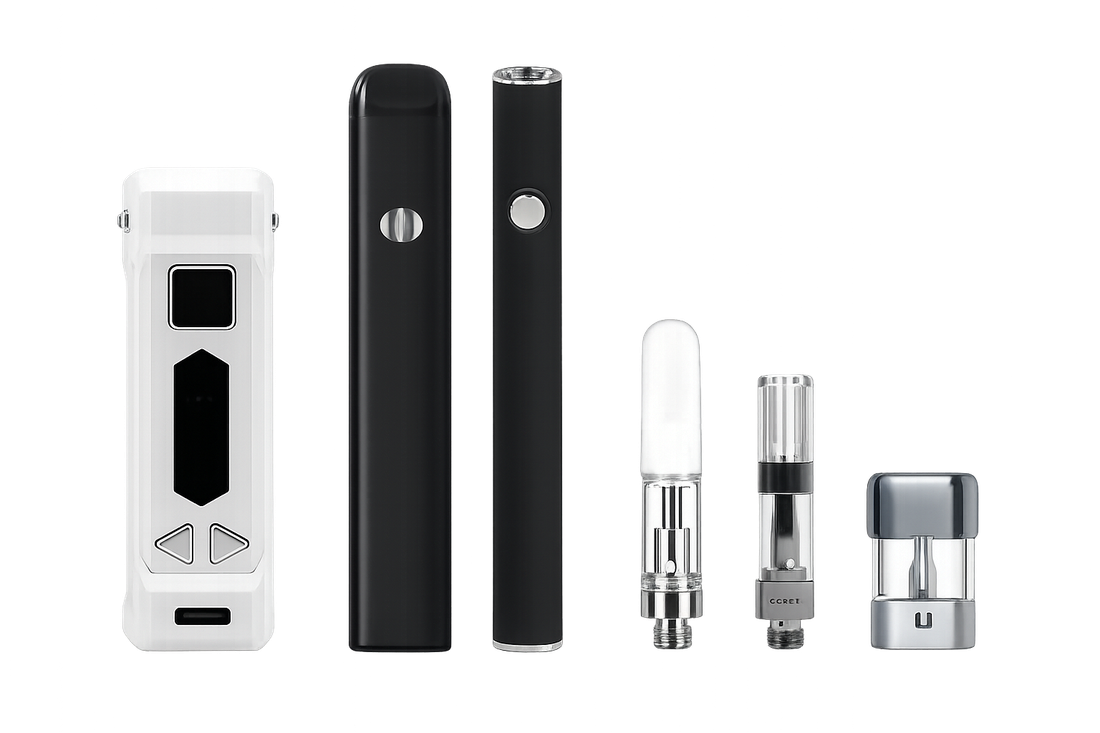
The Universal Vaping Machine automates the entire process of generating, measuring, and capturing aerosol — under consistent, repeatable, programmable conditions. It runs e-cigarettes, cannabis oil cartridges, cannabis vaporizers, pod systems, disposable vapes, and heated tobacco products, plus combustible products such as pre-rolls and tobacco cigarettes — any ENDS, aerosol-, or smoke-generating device.
Define your puff profile (volume, flow rate, rest interval, number of puffs), connect any product, attach your capture method, and press start. The system runs for hours, days, or weeks with no human intervention, logging per-puff data on pressure drop, vapor density, and coil resistance.
Validated for both vapor and combustible testing — under ISO 20768 (vapour products) and ISO 3308 / ISO 4387 (combustible cigarettes).
No manual operation. No inconsistent batteries. No cleaning. Just data.
Configurations
All configurations include control software with lifetime license, USB connectivity, and full programmability.
| Feature | 1-Channel | 4-Channel | 10-Channel |
|---|---|---|---|
| Independent syringe pumps | 1 | 4 | 10 |
| Simultaneous product testing | 1 | 4 | 10 |
| Integrated pressure sensors | — | ✓ | ✓ |
| IR vapor density sensors | ✓ | ✓ | ✓ |
| Direct vape power cables (510) | ✓ | ✓ | ✓ |
| Per-puff resistance metering | ✓ | ✓ | ✓ |
| Button-pusher cables | ✓ | ✓ | ✓ |
| Adjustable tilt mount | — | ✓ | ✓ |
| Endpoint detection | ✓ | ✓ | ✓ |
| Excel & CSV data export | ✓ | ✓ | ✓ |
Features
Software & Data
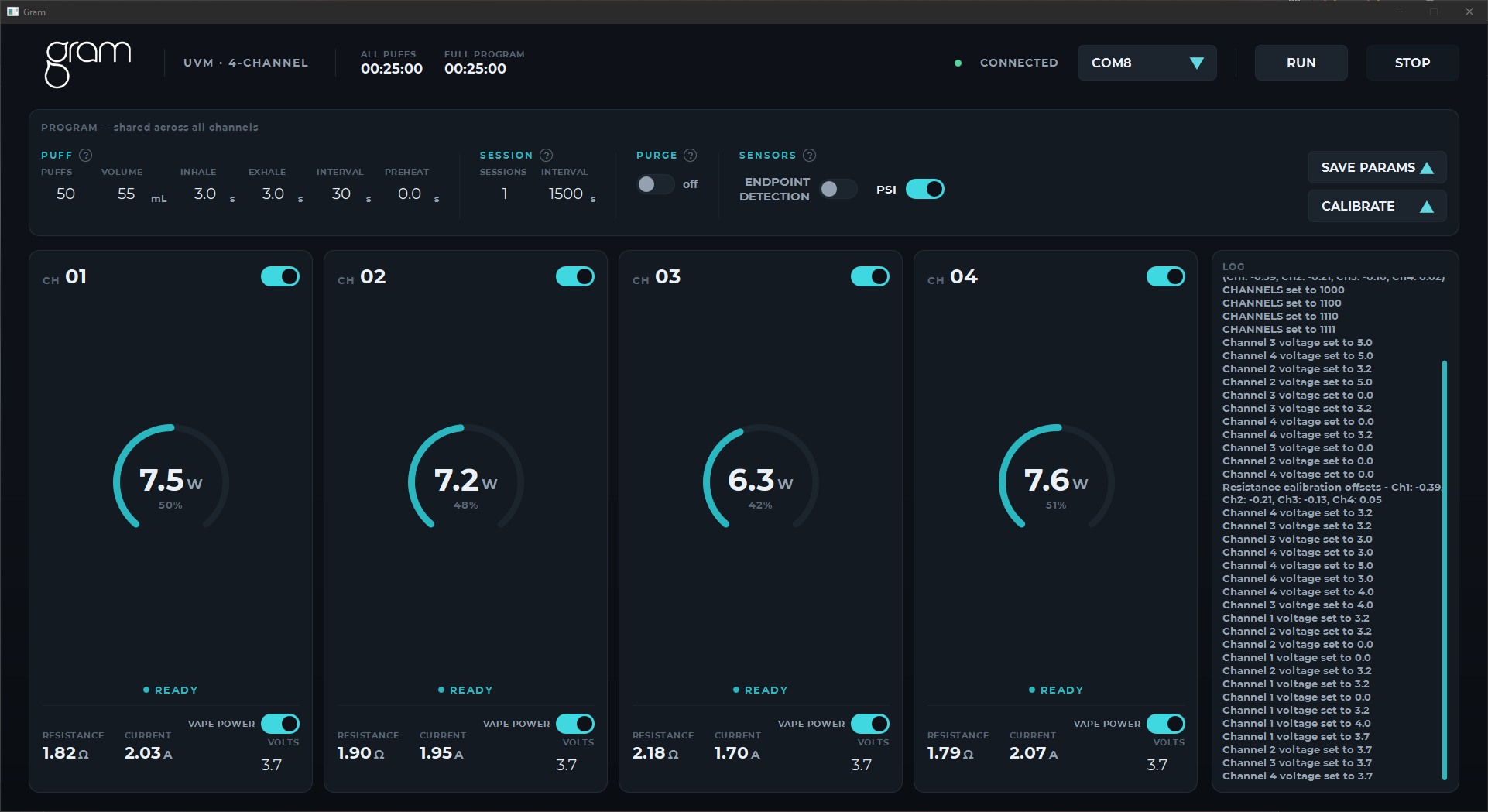
Our desktop software runs on any computer with a USB port and lets you define every parameter: puff volume, flow rate, preheat time, rest interval, number of puffs, sessions, and session intervals. Save and reload testing regimens. Press start and walk away.
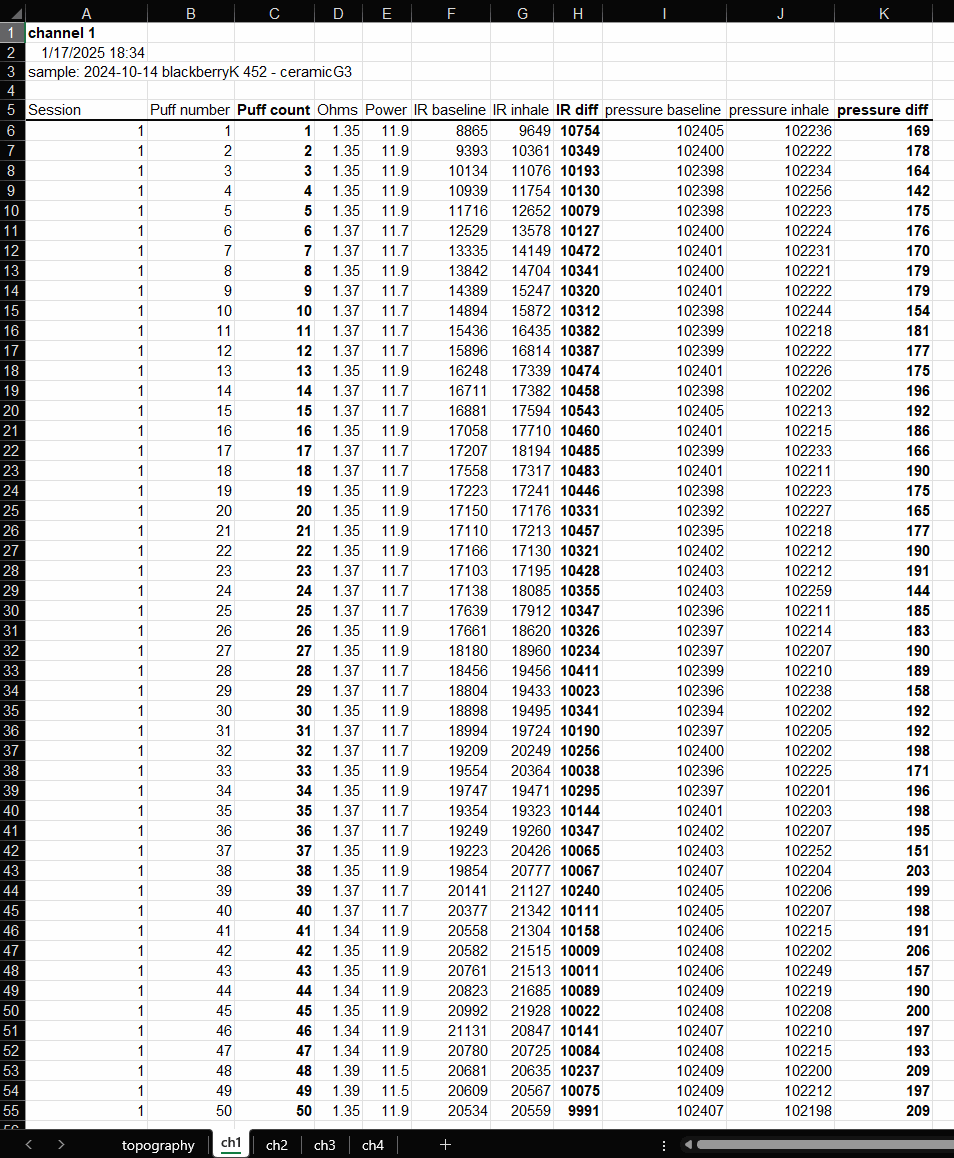
Every run automatically produces a formatted Excel workbook with per-channel data sheets. Each puff is a row. Every metric is a column:
A separate topography sheet captures all run settings for reproducibility. Raw CSV is also generated.
Disposable Flow Path
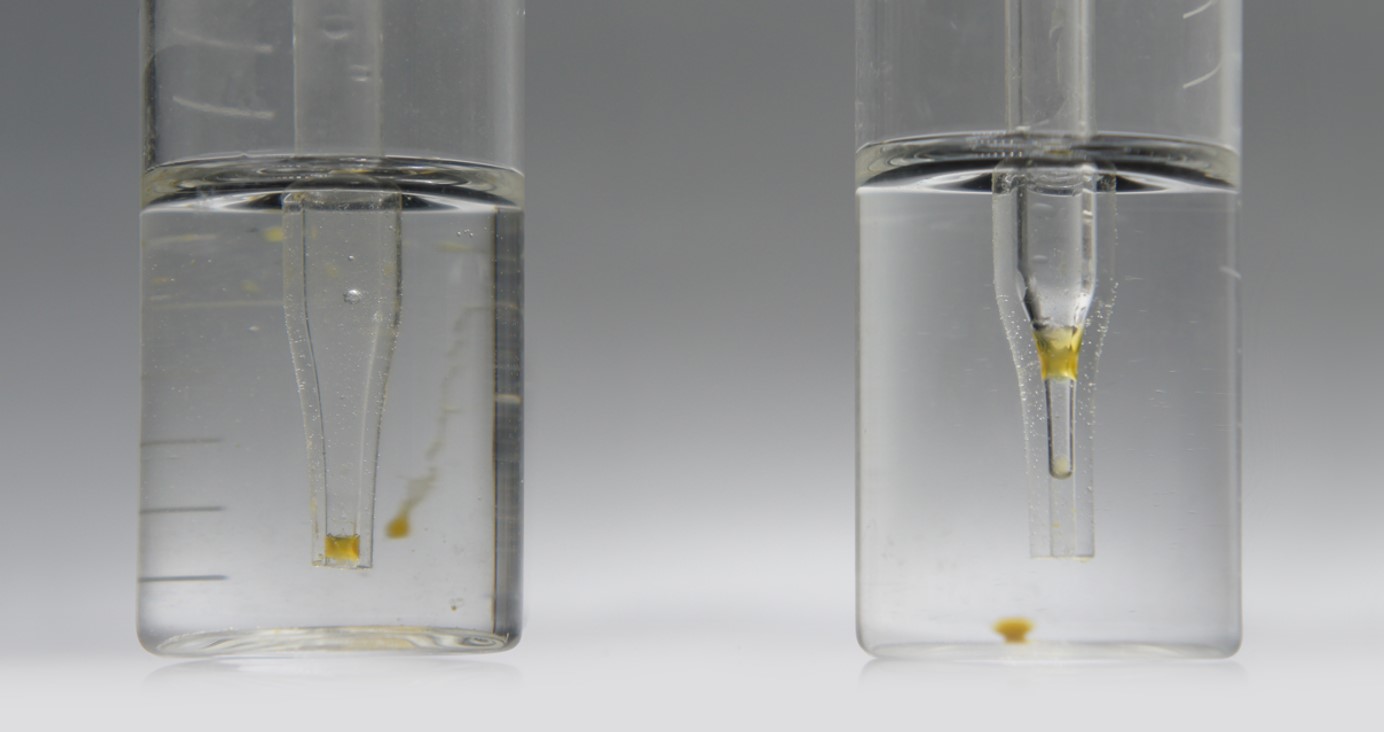
Smoke and cannabis vapor condenses into sticky, tar-like residue inside tubing, valves, and chambers. Competing machines require hours of disassembly and solvent cleaning between runs — and still risk cross-contamination.
The UVM's entire vapor-contact flow path is disposable. Tubing, fittings, filters — swap the whole thing in under 5 minutes. For high-throughput labs running dozens of samples per day, this saves hundreds of hours per year.
Multi-Channel Experiments
The 4-channel and 10-channel systems run fully independent channels. Each channel has its own pump, sensors, and power supply — so you can test identical products at different power levels simultaneously.
Set four different wattages, press start, and in a single session you'll know exactly how power affects clogging, vapor output, pressure drop, and puff count. Or compare four batches, four formulations, or four hardware designs under identical conditions.
Pressure Sensing
Each channel has a dedicated pressure sensor that records the pressure drop across the vapor product on every puff. This quantifies how "tight" or "loose" a product draws, detects clogging trends over time, and flags catastrophic leaks or blockages automatically.
The system also supports pre-test and post-test filter pressure drop measurement with linear interpolation — isolating the vapor product's contribution from the filter's contribution.
Read the App Note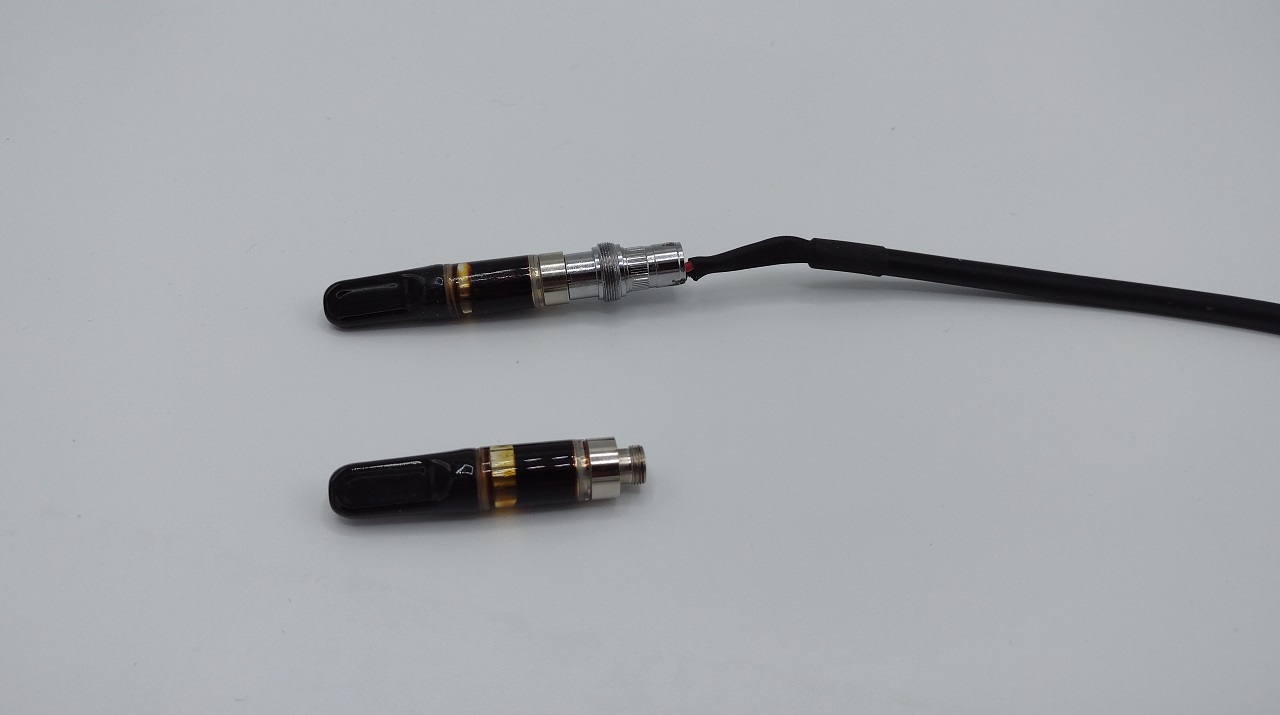
Vape Power
510-threaded power cables connect cartridges directly to the machine, bypassing consumer batteries entirely. Set exact wattage (up to 10W) in software — battery charge state is no longer a variable.
The system reads coil resistance automatically on every puff. Out-of-spec cartridges are flagged immediately on connection. Safety interlocks halt the run if resistance falls below 0.3Ω (short) or above 4.0Ω (open circuit).
Read the App Note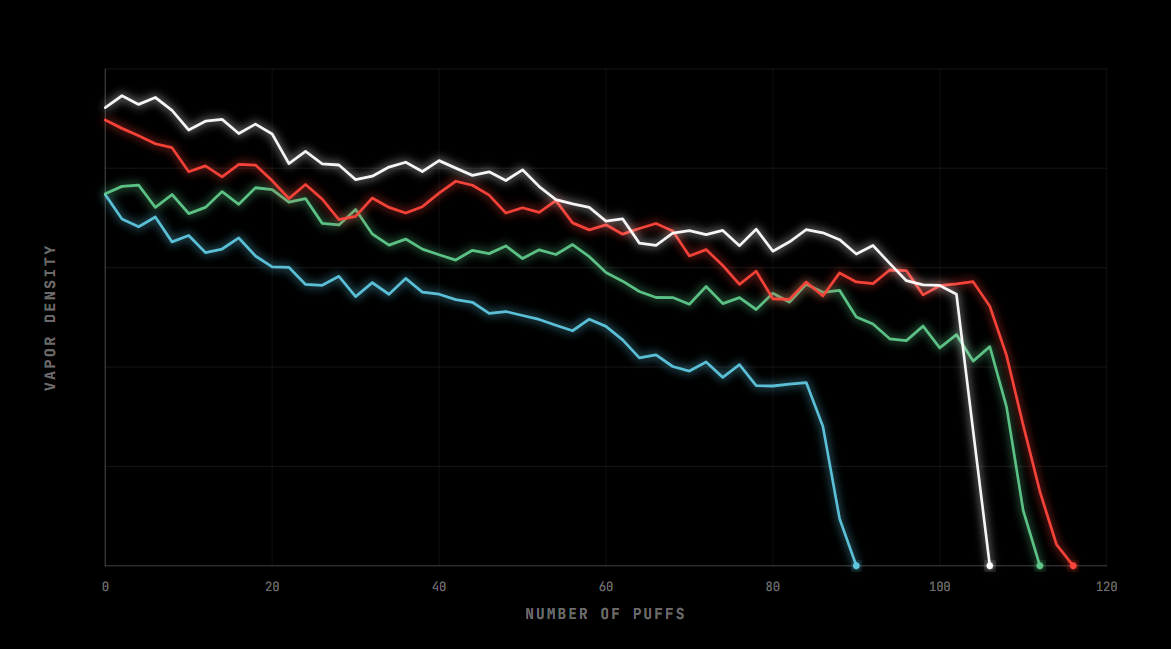
Endpoint Detection
Integrated IR-based vapor density sensors on each channel measure relative aerosol output in real time. A single-click "run until depleted" mode puffs continuously until vapor is no longer detected.
The result: the total standardized puff count of a product. A critical metric for QC, regulatory compliance, and verifying consumer-facing label claims.
Read the App NoteDevice Lifecycle
Complete device lifecycle testing from first puff to last. The UVM runs continuously — days or weeks unattended — recording per-puff data throughout the entire lifespan of the product.
Track how pressure drop, vapor output, and coil resistance evolve over hundreds or thousands of puffs. Identify exactly when and how a product fails: gradual clogging, sudden leak, coil degradation, or battery exhaustion. Critical for hardware qualification and regulatory submissions.
Read the App Note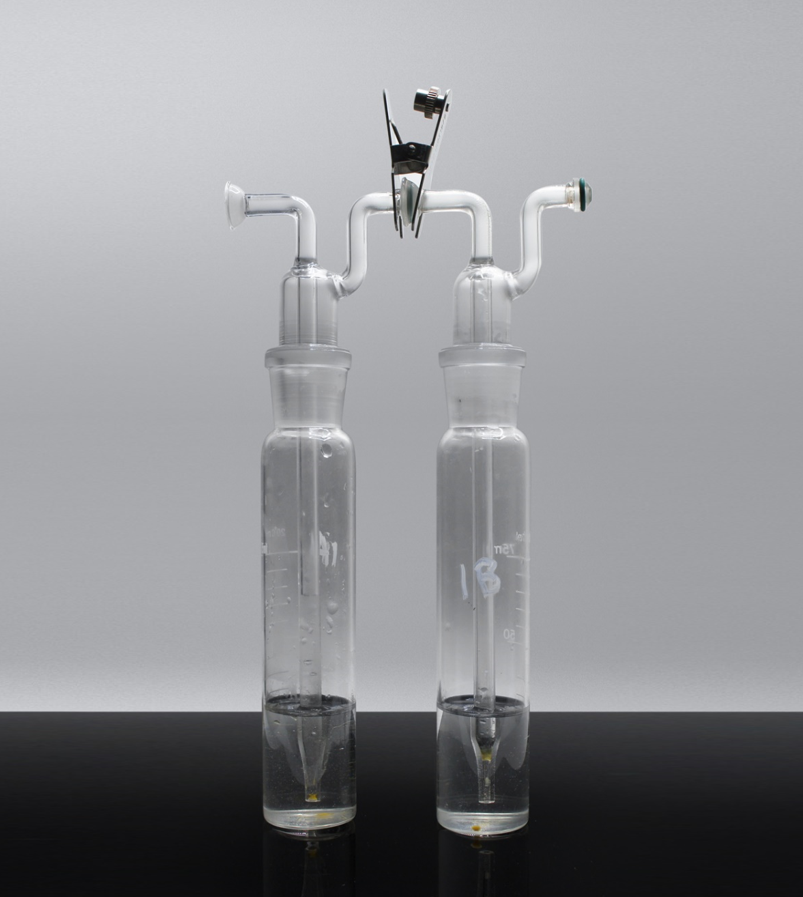
Aerosol Capture
The Gram UVM is highly configurable and is commonly used with a wide range of collection and exposure apparatus:
This makes the platform suitable for gravimetric analysis, chemical profiling (heavy metals, carbonyls, VOCs), toxicological studies, and regulatory submissions.
Read the App NoteActionable Insights
The UVM doesn't just generate vapor — it generates the data you need to qualify products, reject failures, and optimize formulations. Every test produces per-puff, per-channel metrics ready for statistical analysis.
QA/QC Example
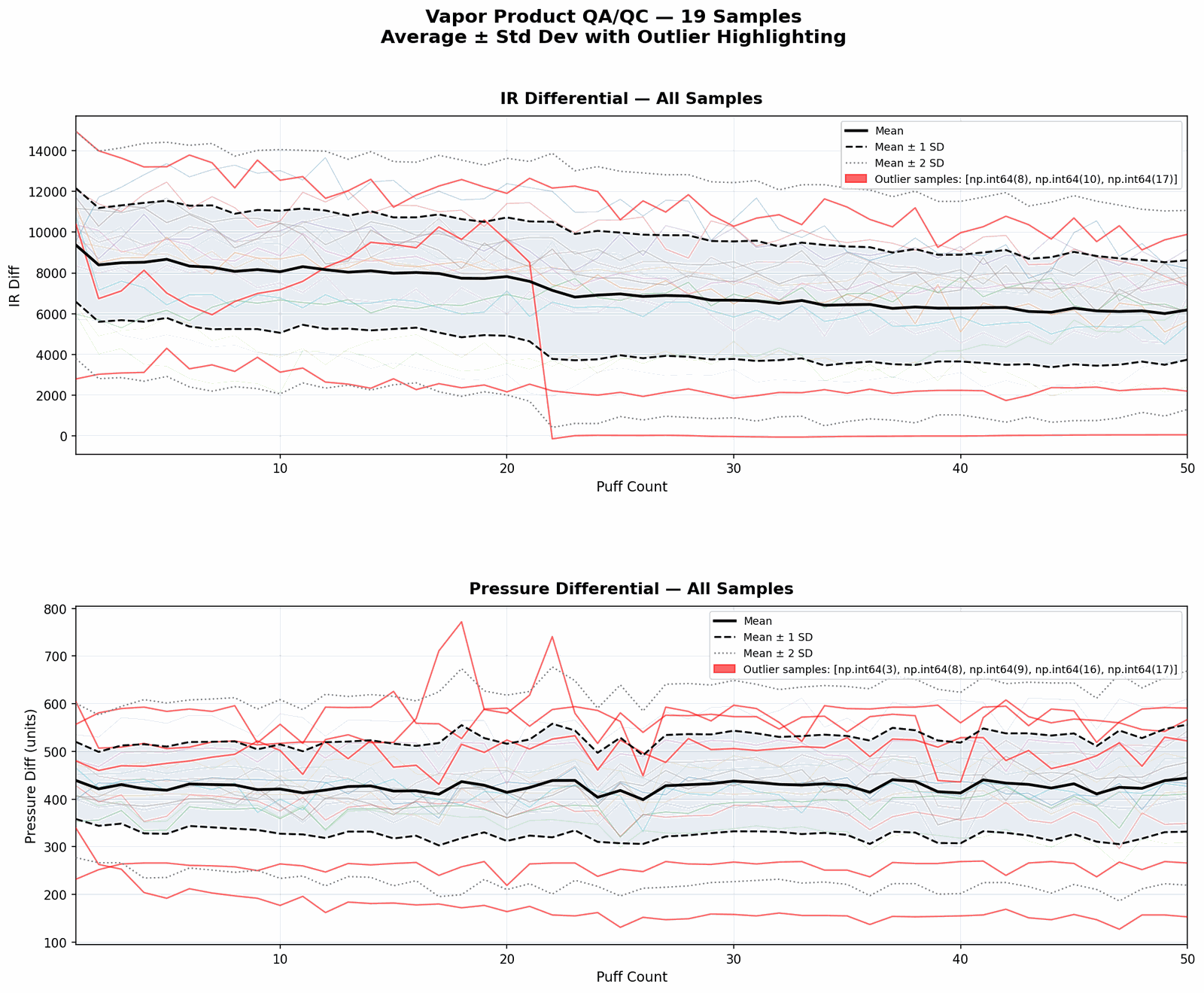
This is real data from a 19-sample QA/QC test run. The top chart shows vapor output (IR differential) per puff across all 19 samples. The bottom chart shows pressure drop per puff.
The black line is the batch mean. The dashed lines are ±1 and ±2 standard deviations. The colored lines are outliers — products that are clogging, leaking, or failing to produce the expected vapor output.
With this data you can immediately identify which specific samples fail, how they fail (low vapor, high pressure, early depletion), and make quantitative go/no-go decisions on hardware or formulation changes.
Data Output
Every test run produces a formatted Excel workbook (one sheet per channel plus a topography sheet documenting all test parameters) and a matching raw CSV export. A typical 4-channel, 50-puff test generates 200 rows of per-puff data across 11 columns per channel — ready for import into your analysis pipeline.
No manual transcription. No guesswork. The data is there: which puff, which channel, what resistance, what power, how much vapor, how much pressure drop. Overlay it, chart it, run statistics — or just scan for outliers and make a call.
↓ Download an example 4-channel log (.xlsx)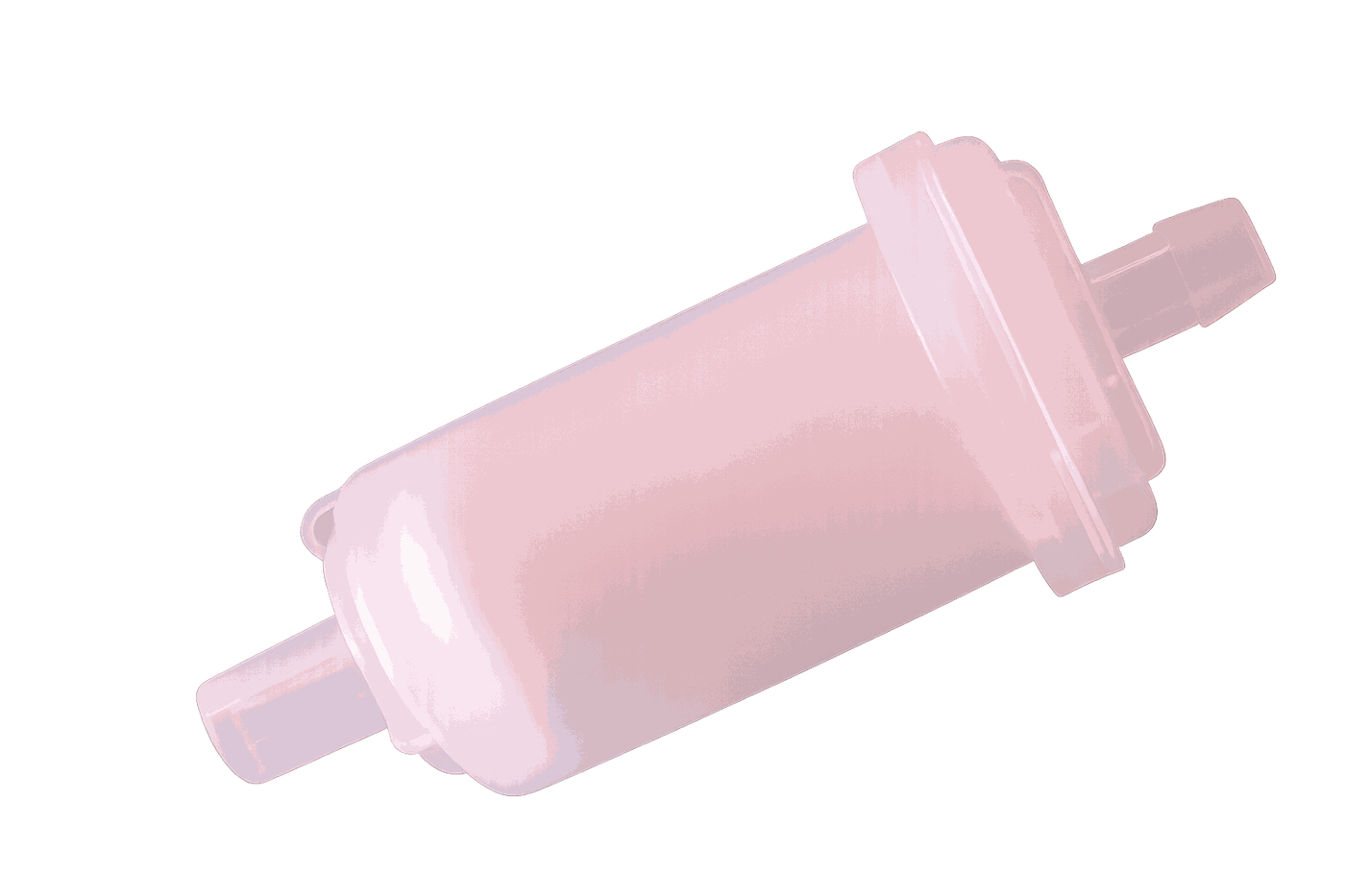
Consumables
Gram manufactures disposable PTFE fiber cartridge filters designed for the UVM. They serve a dual purpose:
System protection. Placed inline, the filter traps vapor condensate before it reaches the pump and valve — keeping the system clean and eliminating the need for internal cleaning.
Emissions capture for analysis. With ~96-97% capture efficiency, the filters are suitable for gravimetric analysis (mass of aerosol per puff) and chemical profiling. Captured material can be extracted via solvent rinse for downstream analysis including heavy metals (ICP-MS), carbonyls (HPLC), and VOCs.
Low pressure drop (~273 Pa at 70 mL/3 sec). Disposable — no cleaning required.
Technical Details Order FiltersSpecifications
| Pump type | Precision syringe pump |
|---|---|
| Max flow rate | 45 mL/s |
| Max puff volume | 100 mL (standard); larger volumes available by request |
| Vape power | Variable, software-controlled; 5.0 A fuse-limited |
| Resistance safety range | 0.3 – 4.0 Ω |
| Supported standards | ISO 3308, ISO 20768, ISO 22486, Health Canada Intensive (HCI), CORESTA No. 81 (CRM 81), FTC, custom regimes |
| Software | Desktop software (macOS & Windows), lifetime license included |
| Data export | Formatted Excel workbook + raw CSV |
| Duty cycle | Continuous — rated for days/weeks of unattended operation |
| Maintenance | Disposable flow path (replaced in minutes), pump lubrication at 100,000+ cycles |
| Warranty | 3 years |
| Lead time | Immediate — ships from California, USA |
How We Compare
Most smoking machines were designed for combustible cigarettes and adapted for vapes as an afterthought. The UVM was designed from the ground up for the products being tested today.
| Feature | Typical Smoking Machine | Gram UVM |
|---|---|---|
| Cleaning required | Hours of disassembly and solvent cleaning between runs | Zero — entire flow path is disposable |
| Flow path | Fixed, requires cleaning | Disposable, replaced in minutes |
| Sensors included | Optional add-ons, purchased separately | Pressure, IR vapor density, resistance — all built-in per channel |
| Multi-channel independence | Shared pumps across channels | Fully independent pump, sensors, and power per channel |
| Direct vape power | Not available or external | Built-in 510 power cables, software-controlled wattage |
| Publications | None | 30+ peer-reviewed papers (UCSF, Scripps, Nature, ACS) |
| Regulatory users | — | FDA, CDPHE, CDPH, Australian regulators |
| Cannabis-specific design | Adapted from tobacco machines | Purpose-built: disposable flow path eliminates sticky condensate issues |
| Lead time | 8–12+ weeks | Ships immediately |
| Warranty | Varies, often 1 year | 3 years |
Contact us for a quote, a demo, or to discuss your specific testing requirements.
Request a Quote